Perception becomes motion
Intelligent Logistics Rover
A competition-built embodied system combining OpenMV vision, Arduino control, a custom PCB, and a mechanical arm for intelligent logistics handling.
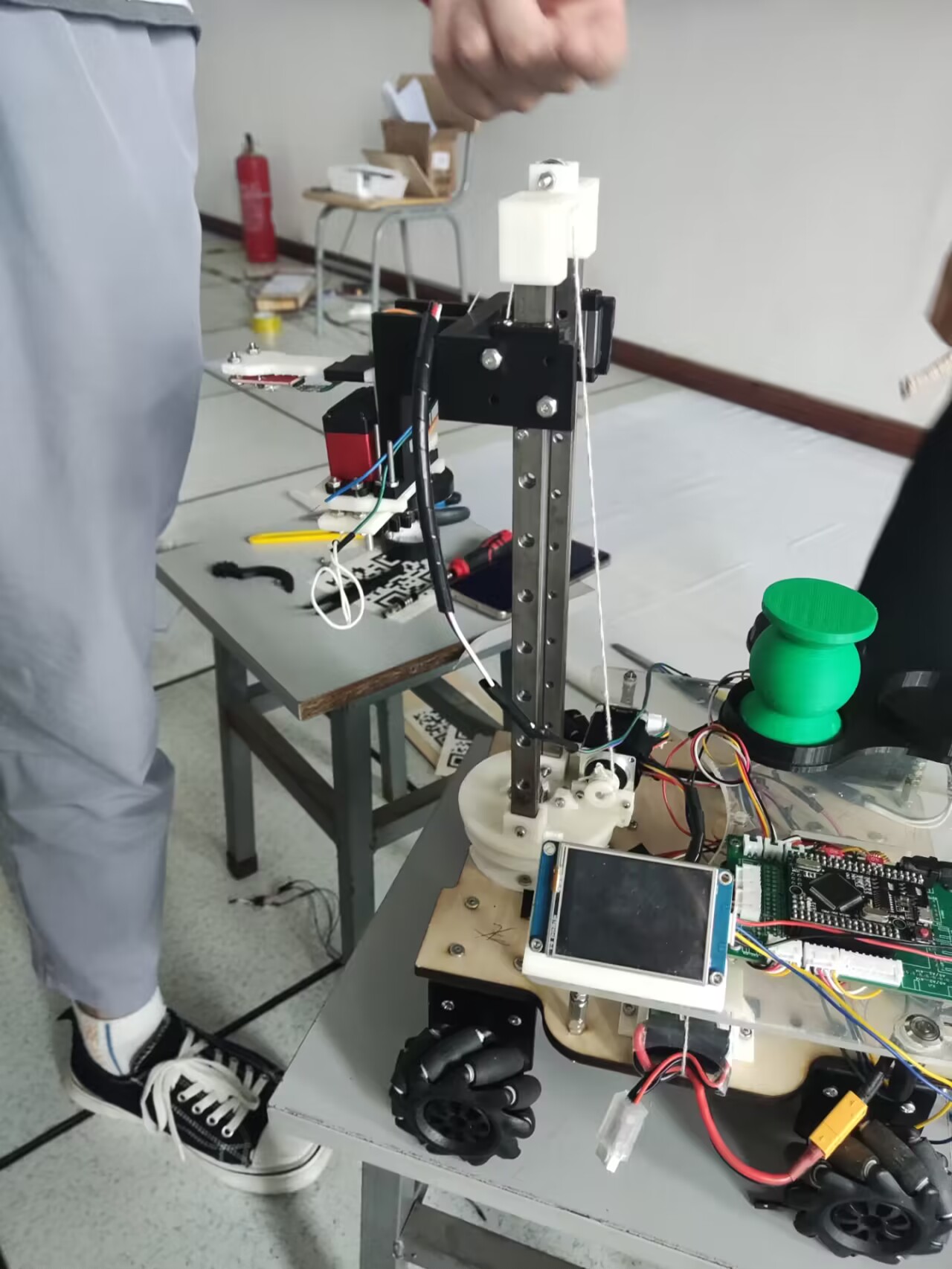
A machine that closes the loop
This project was built for an intelligent logistics task: the machine must perceive a work area, move through it, manipulate objects, and complete a transport sequence. The system combines an OpenMV camera, an Arduino controller, a custom expansion board, motorized wheels, and a vertical arm with a gripper.
The engineering value is in the integration boundary. Vision produces a compact signal, the embedded controller converts it into an action sequence, and the chassis and arm make the result observable in the physical world. It is a small but concrete example of embodied intelligence: perception is only useful when it changes what the machine does.
Build evidence
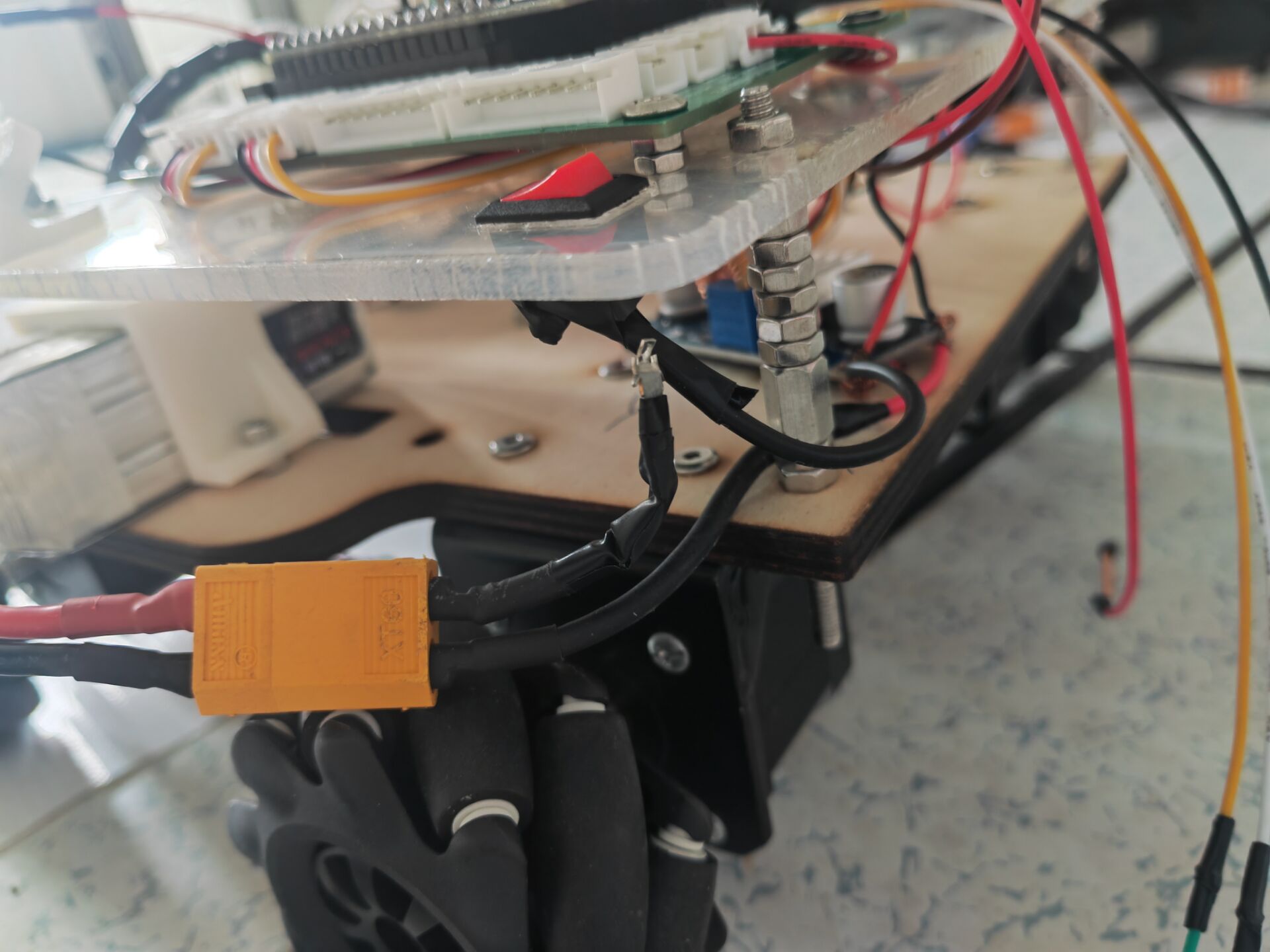
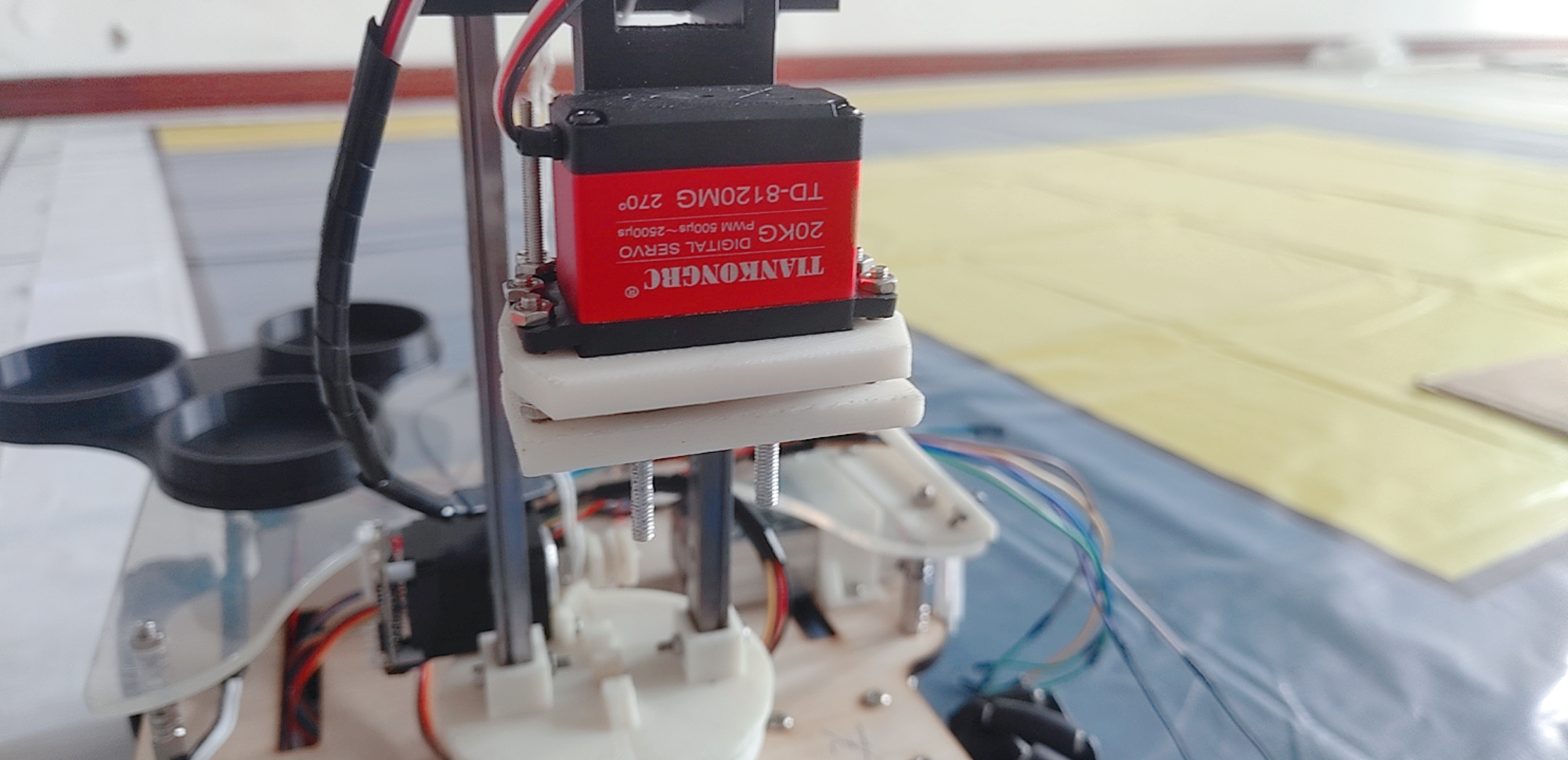
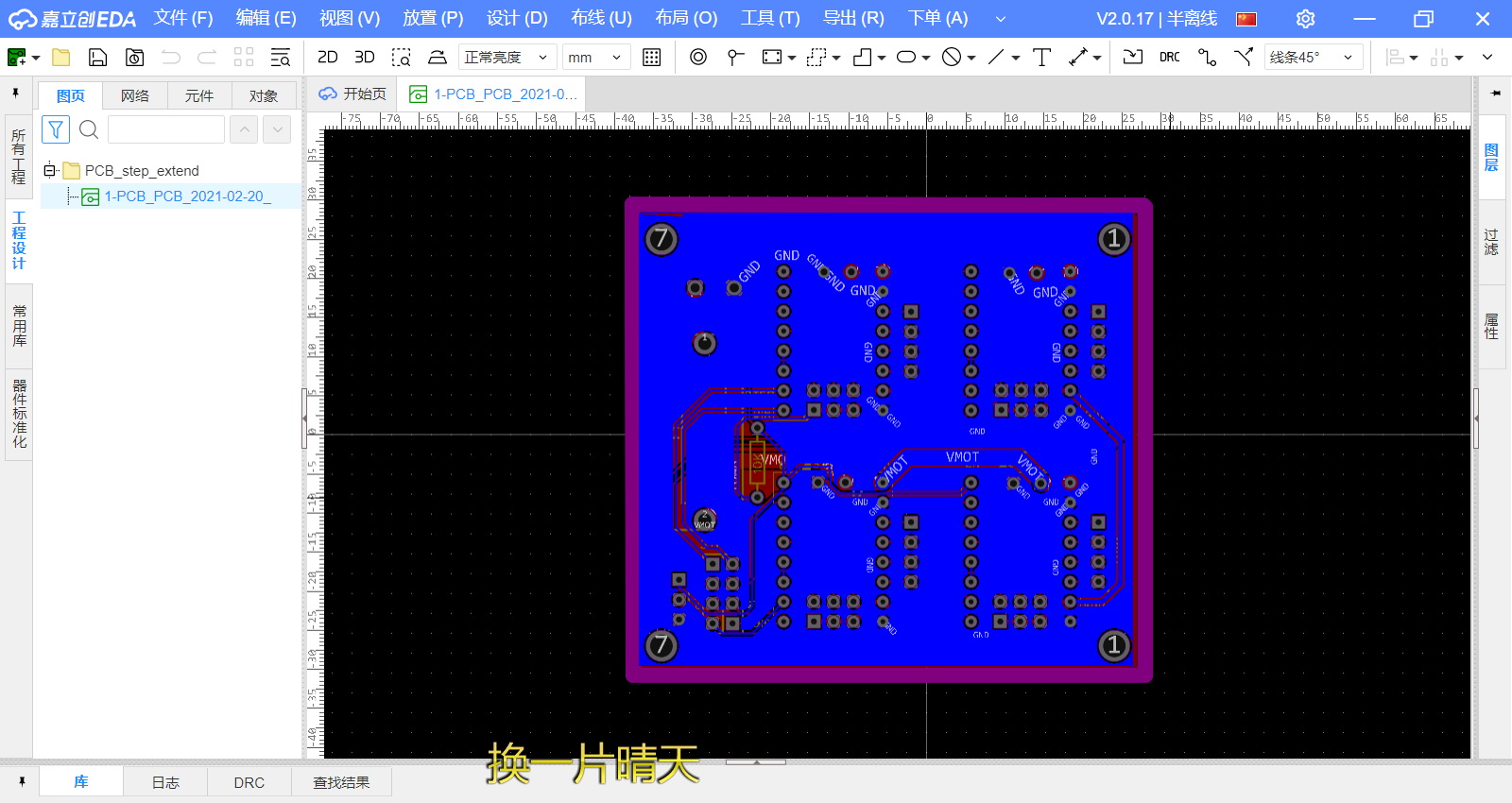
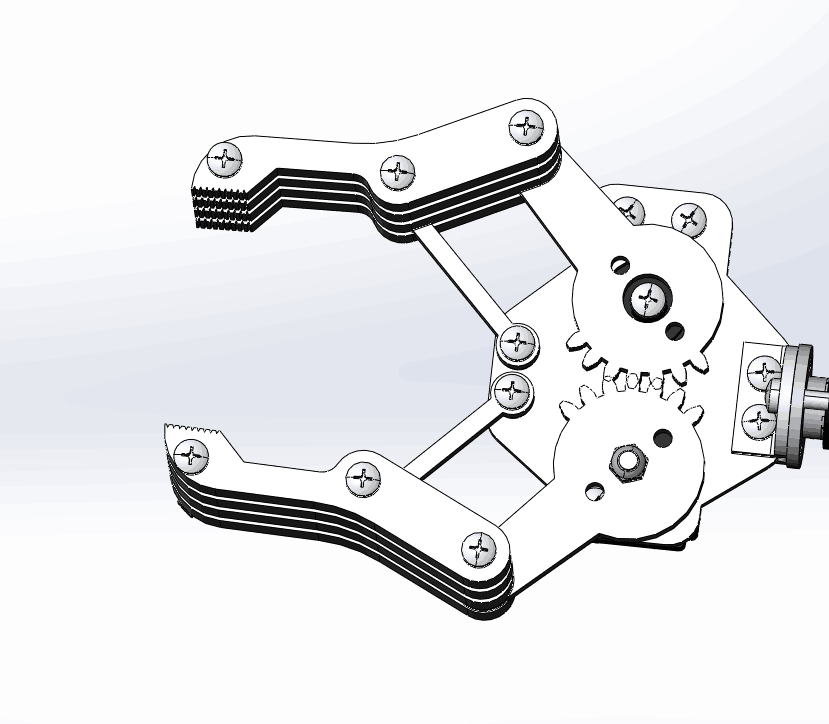
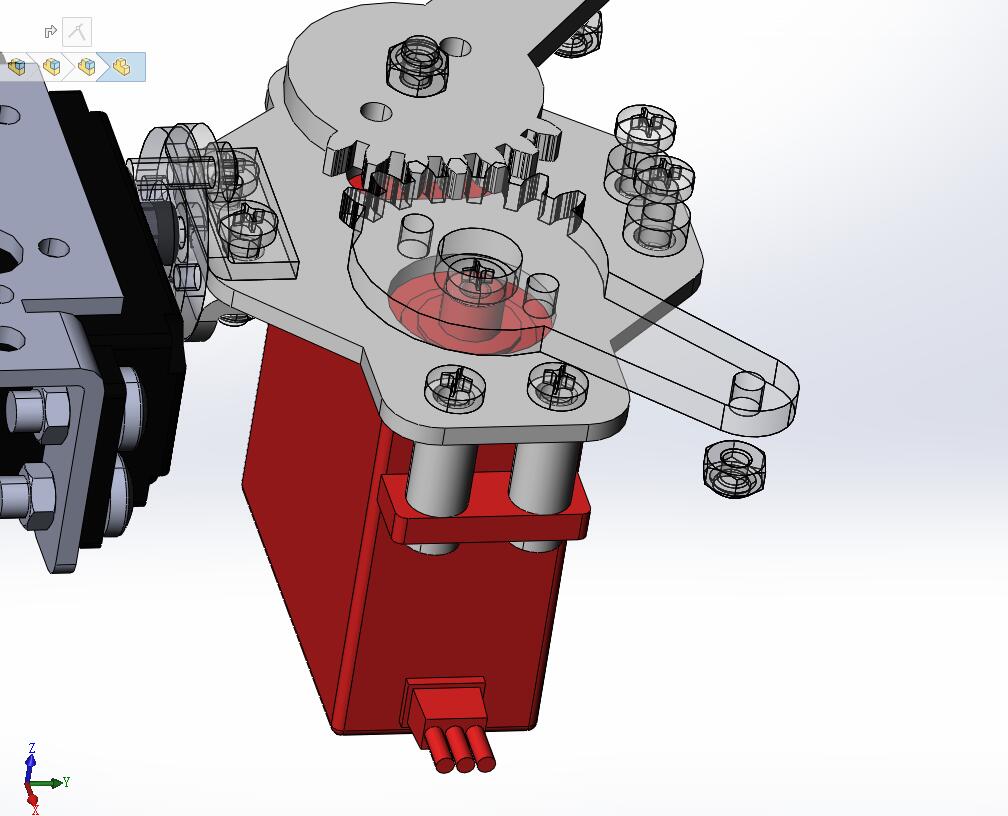
The photographs and engineering artifacts below document the physical system. The full prototype is shown first; the following views make the control board, actuator, PCB, and gripper geometry inspectable.
What I implemented
- Perception-to-action integration: OpenMV provides the visual input while the Arduino program coordinates motion and handling decisions.
- Hardware abstraction at the edge: A dedicated expansion board organizes motor, servo, serial, and power connections around the Arduino controller.
- Mechanical embodiment: CAD-designed parts and actuated joints turn a symbolic target into a grasp-and-transport motion.
- Debuggable construction: The project keeps the sketches, STL parts, PCB files, design report, and field media together so the system can be inspected as an engineered artifact.
Field media
A physical system is judged by its motion.
The short clip is included as an engineering record of the prototype and its integration work.
Why it belongs beside NeuralEngine
NeuralEngine studies the boundary from source to simulated behavior. This rover studies the same boundary in hardware: a visual observation becomes a controller decision, then a mechanical consequence. Together they show the direction of my work more clearly than either a software demo or a circuit photo alone: build an interpretable interface, connect it to an environment, and make the result visible.